Learn the types of conjunctions in English and how to expand simple, compound, and complex sentences. Improve your writing and speaking step by step.
Why Learning Conjunctions Is Important
Conjunctions connect ideas. They help you expand sentences and improve fluency. There are three types: coordinating, subordinating, and correlative. Master them, and your English becomes clearer and stronger.
Understanding conjunctions helps you:
- Expand simple sentences
- Improve writing clarity
- Speak more fluently
- Connect ideas logically
- Avoid basic sentence patterns
Without conjunctions, your English may stay short and limited. With them, you can express complex thoughts confidently.
Introduction
If you want to improve your English writing and speaking, you must understand the types of conjunctions in English. Many learners struggle to expand their sentences because they cannot connect ideas effectively.
When you understand sentence structure — simple, compound, complex, and compound-complex sentences — you can express your ideas more clearly and naturally. Conjunctions help you connect thoughts, add details, explain reasons, and build stronger sentences step by step.
Step 1 – Understand Basic Sentence Structures
Before learning conjunctions, you need to understand how sentences are formed.
1. Simple Sentence
A simple sentence has one complete idea (one independent clause).
Example:
I enjoy learning English.
It has:
- A subject
- A verb
- A complete meaning
When learners only rely on simple sentences, their communication becomes limited, repetitive, and sometimes unclear. A simple sentence communicates one idea, but real communication often requires explanation, comparison, or reasoning.
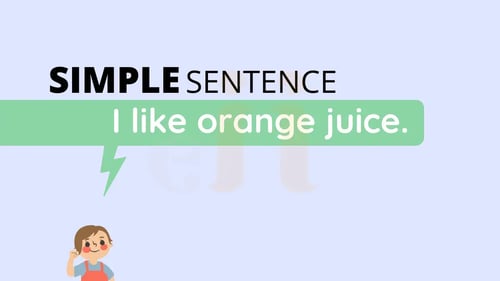
Unlike simple sentences, compound and complex sentences allow speakers and writers to connect ideas naturally, showing relationships such as cause, contrast, or result.
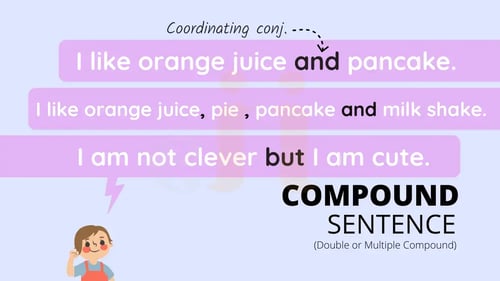
2. Compound Sentence
A compound sentence joins two independent clauses.
Example:
I enjoy learning English, and I practice every day.
Two complete ideas are connected.
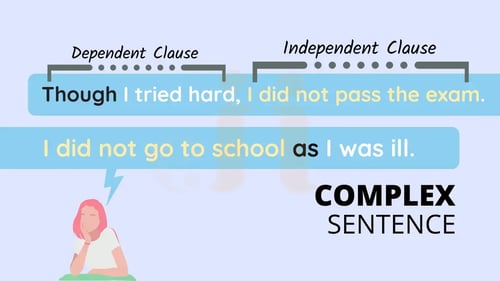
3. Complex Sentence
A complex sentence has:
- One independent clause
- One dependent clause
Example:
Though I tried hard, I did not pass the exam.
One idea supports the main idea.
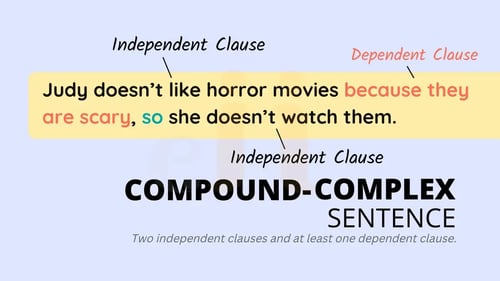
4. Compound-Complex Sentence
This sentence contains:
- Two independent clauses
- At least one dependent clause
Example:
I practice every day because I want to improve, and I watch English videos at night.
Judy doesn't like horror movies because they are scary, so she doesn't watch them.
These structures allow you to expand ideas clearly.
What Are the Three Types of Conjunctions?
There are three main types of conjunctions in English:
- Coordinating conjunctions
- Correlative conjunctions
- Subordinating conjunctions
Each type connects ideas in a different way.
Coordinating conjunctions connect equal ideas.
Correlative conjunctions work in pairs to create balance, comparison, and emphasis within a sentence.
Subordinating conjunctions show the relationship between dependent and independent ideas.
Coordinating Conjunctions
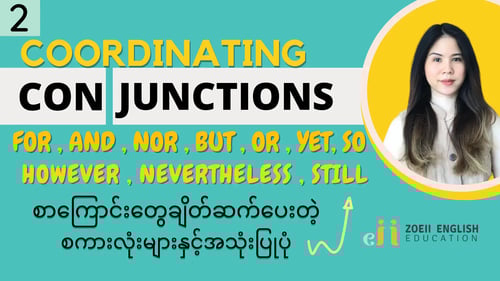
Coordinating conjunctions (such as and, but, or) help link equal thoughts smoothly.
Subordinating conjunctions (such as because, although, while) explain relationships like cause, contrast, time, or condition.
Common examples:
and, but, or, so, yet, for, nor
They connect:
- Two equal ideas
- Two independent clauses
Example:
I wanted to improve my English, so I joined a course.
Why they are important:
- They combine related ideas
- They make sentences flow naturally
- They reduce short, repetitive sentences
Correlative Conjunctions
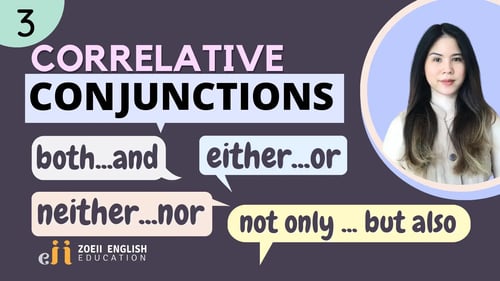
Correlative conjunctions (such as either…or, not only…but also, both…and) create parallel structure and highlight balance between two ideas. Together, these tools allow learners to express opinions more logically, describe experiences more clearly, and present arguments with stronger structure and emphasis.
Examples:
both…and
either…or
neither…nor
not only…but also
Example:
Not only did I improve my grammar, but I also became more confident.
Why they are important:
- They emphasize two ideas
- They create balanced structure
- They make writing sound more advanced
Subordinating Conjunctions
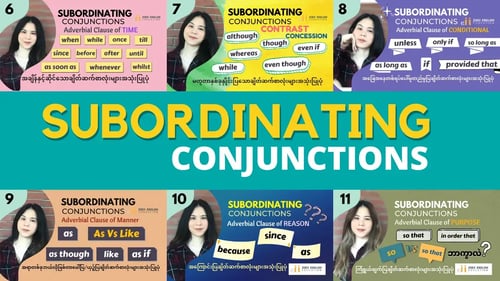
Subordinating conjunctions are words that connect a dependent clause to an independent clause. They show that one idea relies on another to make complete sense.
Unlike coordinating conjunctions, which join equal ideas, subordinating conjunctions create hierarchy. They signal relationships such as cause, contrast, condition, time, purpose, or result.
Common subordinating conjunctions include:
- Cause: because, since, as
- Contrast: although, though, even though
- Condition: if, unless, provided that
- Time: when, while, after, before, until
- Purpose/Result: so that, in order that
For example:
- I stayed home because I was tired. (cause)
- Although it was raining, we went outside. (contrast)
- If you practice daily, you will improve. (condition)
By using subordinating conjunctions, learners can explain reasons, show contrasts, describe conditions, and structure complex thoughts more clearly. They allow speakers and writers to move beyond simple sentences and express ideas with depth and precision.
Quick Practice
Combine these sentences using a conjunction:
- I was tired. I finished my homework.
- She studies hard. She wants to pass the exam.
- I like English. I find grammar difficult.
Try using different types of conjunctions.
Once learners recognize how sentences are built, conjunctions become easier to understand. Instead of memorizing linking words randomly, learners begin to see how each conjunction serves a purpose in expanding meaning. This foundation makes both speaking and writing more structured and confident over time.
Learn More with Structured Guidance
If you would like step-by-step lessons with clear Burmese explanations and guided practice, you can explore the full courses at Zoeii English.
You’ll find structured lessons designed to help you master sentence structure and conjunctions confidently.